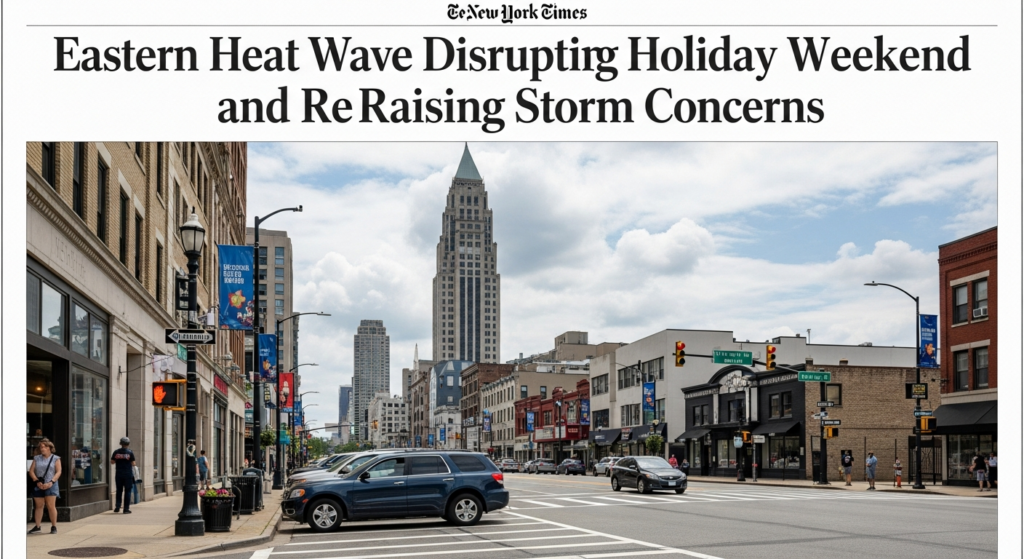
An intense heat wave gripped much of the eastern United States over the July Fourth holiday weekend, disrupting planned celebrations and prompting concerns about the strain on power grids and the potential for severe weather. Temperatures soared across multiple states, leading to canceled or modified outdoor events and prompting advisories for residents to take precautions against the heat.
National weather reports indicated that the extreme heat was a significant factor for holiday weekend activities, rather than a general seasonal condition. This surge in temperature coincided with increased demand for electricity as people used air conditioning to cope with the sweltering conditions. Utility providers monitored power consumption closely, anticipating potential strain on the grid.
The prolonged period of high temperatures also raised concerns among meteorologists about its potential impact on storm development. Hot, humid air can act as fuel for thunderstorms, and the conditions observed over the weekend were noted for their potential to generate severe weather events. Forecasters watched closely for any signs of instability that could lead to significant storms in the affected regions.
While the immediate focus was on managing the heat and its effects on daily life and holiday plans, the underlying atmospheric conditions also drew attention for their implications on broader weather patterns. The interplay between extreme heat, high humidity, and atmospheric pressure systems presented a complex meteorological scenario for forecasters across the eastern seaboard.
In Novi, residents experienced warm summer conditions typical for July. Local officials and utility companies monitored the broader regional situation. The Novi Community School District, a major employer, advised staff and students to stay hydrated during any summer activities. Providence Park Hospital, another significant local institution, reminded the public about heat-related health risks and recommended seeking cool environments during the hottest parts of the day. The extended period of high temperatures across the East Coast served as a reminder of the impact of extreme weather on public life and infrastructure.