

Michigan, August 19, 2025
News Summary
At Michigan State University, researchers are developing an innovative program that trains dogs, including a retired police dog named Maple, to detect harmful bacterial diseases in honey bees. The initiative aims to combat the declining bee population impacted by various threats like diseases and pesticides. By utilizing canine capabilities, the program hopes to facilitate rapid identification of disease in hives and contribute to the conservation of these crucial pollinators, ultimately benefiting global agriculture.
Michigan Researchers Enlist Former Police Dog to Combat Honey Bee Diseases
Researchers at Michigan State University (MSU) are pioneering a new training program that utilizes dogs to detect bacterial diseases harmful to honey bee populations, which are facing significant threats. The initiative is part of the university’s Pollinator Performance Center, aimed at protecting these essential pollinators that are experiencing declining numbers due to various factors including diseases, insecticides, climate change, and a lack of diverse food sources.
A primary focus of the training program is to train dogs to identify American foulbrood, a serious bacterial disease that affects honey bee larvae and poses a significant risk to colony health. With a sizeable portion of the human diet relying on plants pollinated by bees, this research holds crucial implications for agriculture and food production.
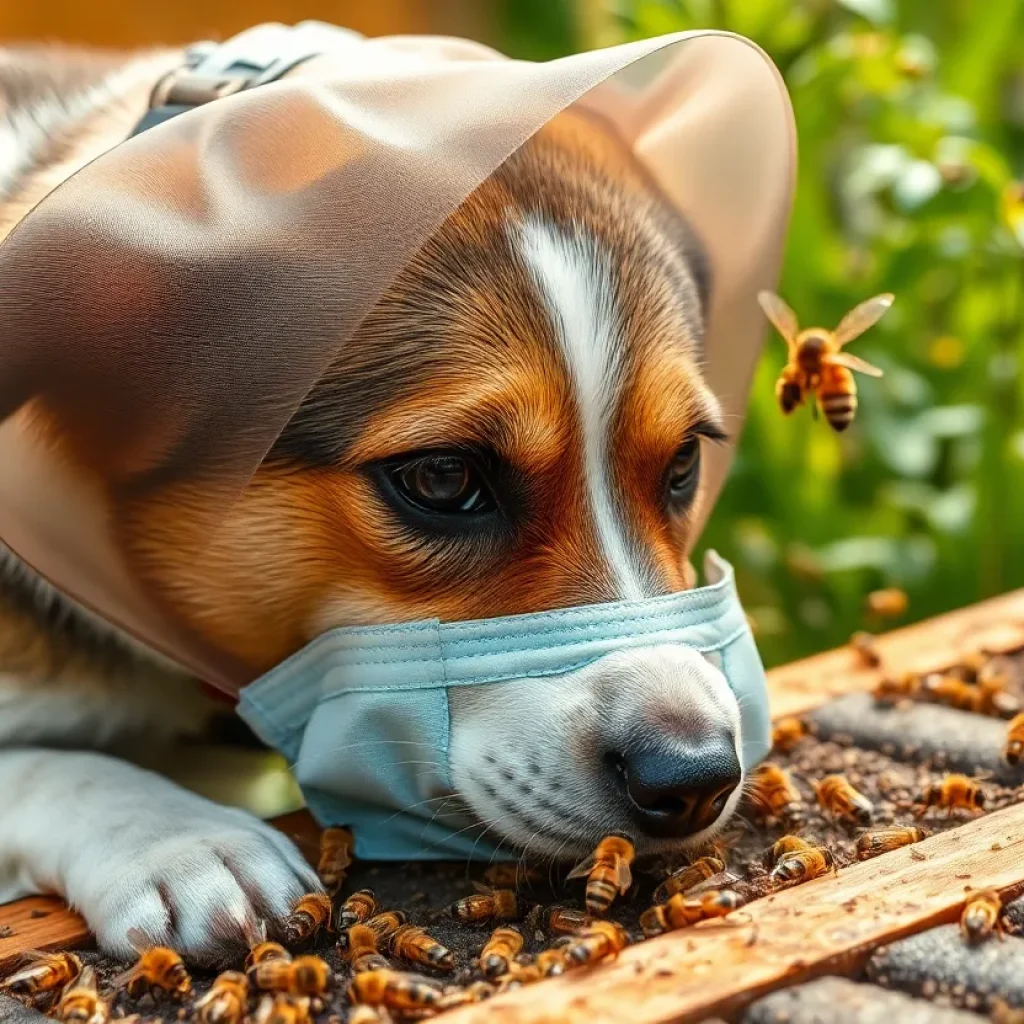
At the center of this innovative program is Maple, a retired 9-year-old English springer spaniel who previously served as a human remains detection dog for the St. Joseph County sheriff’s office. To ensure Maple’s safety while working in active beekeeping environments, she is outfitted in a protective yellow suit complete with a veil for her head and booties for her paws.
Training and Implementation
Owner and trainer Sue Stejskal highlights the necessity for dogs in active bee yards to wear personal protective equipment, which is essential amidst active hives. Maple’s successful adaptation into the new role reflects the potential of canine assistance in maintaining honey bee health. After retiring in 2024 due to an injury sustained during a case in Ontario, Maple has found a new purpose in this disease detection program.
The initiative was sparked by MSU professor Meghan Milbrath, who connected with Stejskal to establish a canine detection strategy focused on honey bee diseases. This follows a precedent set by Maryland’s agriculture department, which has successfully utilized canine detection methods for identifying diseases in beehives.
MSU’s objectives extend beyond Maple. The university plans to train additional dogs to bolster honey bee disease detection efforts. Milbrath also aims to document Maple’s training process and plans to co-author a book with Stejskal detailing their detection strategy.
Demonstration and Results
During recent demonstrations, Maple successfully identified scent clues associated with American foulbrood and was rewarded with toys for her efforts. This method of rewarding working dogs not only reinforces their training but also adds an element of play to the process, which can enhance overall effectiveness in detecting diseases.
The ultimate goal of this project is to enable rapid identification of infected hives, allowing beekeepers to manage their colonies more efficiently. This capability is increasingly critical as honey bee populations face multiple threats, including not only diseases but also pesticides and inadequate nutrition.
Background and Importance of Bee Conservation
Michigan is home to 465 native bee species, underscoring the state’s commitment to bee conservation efforts amid declining populations. The research being conducted at MSU is vital not only for the bees themselves but also for global agricultural practices that depend on pollination.
Individuals can support bee populations by creating pollinator gardens and reducing pesticide use, contributing to the overall health of ecosystems and food security. The work at MSU exemplifies a forward-thinking approach to safeguarding a species so integral to our food supply and natural biodiversity.
Frequently Asked Questions
What is the purpose of the training program at Michigan State University?
The training program aims to develop canine skills for detecting bacterial diseases in honey bees, such as American foulbrood, to enhance beekeepers’ ability to manage their colonies.
How is Maple involved in the project?
Maple, a retired police dog, is being trained to detect the scent associated with honey bee diseases. She uses protective gear while working in bee yards to ensure her safety.
What are the main threats to honey bee populations?
Threats to honey bee populations include diseases such as American foulbrood, pesticides, climate change, and limited nutrition due to a lack of diverse food sources.
Key Features of the Honey Bee Detection Program
| Feature | Description |
|---|---|
| Dog Training Program | Training dogs to detect honey bee diseases like American foulbrood. |
| Maple’s Role | Former police dog adapting to honey bee disease detection with protective gear. |
| Rapid Disease Identification | Enabling quick detection of infected hives for efficient colony management. |
| Research and Documentation | MSU plans to document the training process and findings for educational purposes. |
| Broader Impact | Contributing to the conservation of honey bee populations critical to global food systems. |
Deeper Dive: News & Info About This Topic
HERE Resources
Training Dogs to Combat American Foulbrood in Honey Bees
Training Dogs to Detect Honey Bee Diseases
Austin Launches New Breast Cancer Screening Program
March Marks Kidney Cancer Awareness Month: Focus on Early Detection
Egg Shortage Attributed to Biden’s Policies and Bird Flu Outbreaks
Additional Resources
- ABC News: Former K-9 Maple Busy Sniffing Out Threats to Michigan
- Google Search: Honey Bee Disease Detection
- MLive: Retired Police Dog Helps MSU Sniff Out Beehive Problems
- Encyclopedia Britannica: Honey Bees
- US News: Former K-9 Maple Sniffs Out Threats to Honey Bee Colonies
- Google News: Honey Bee Conservation