


News Summary
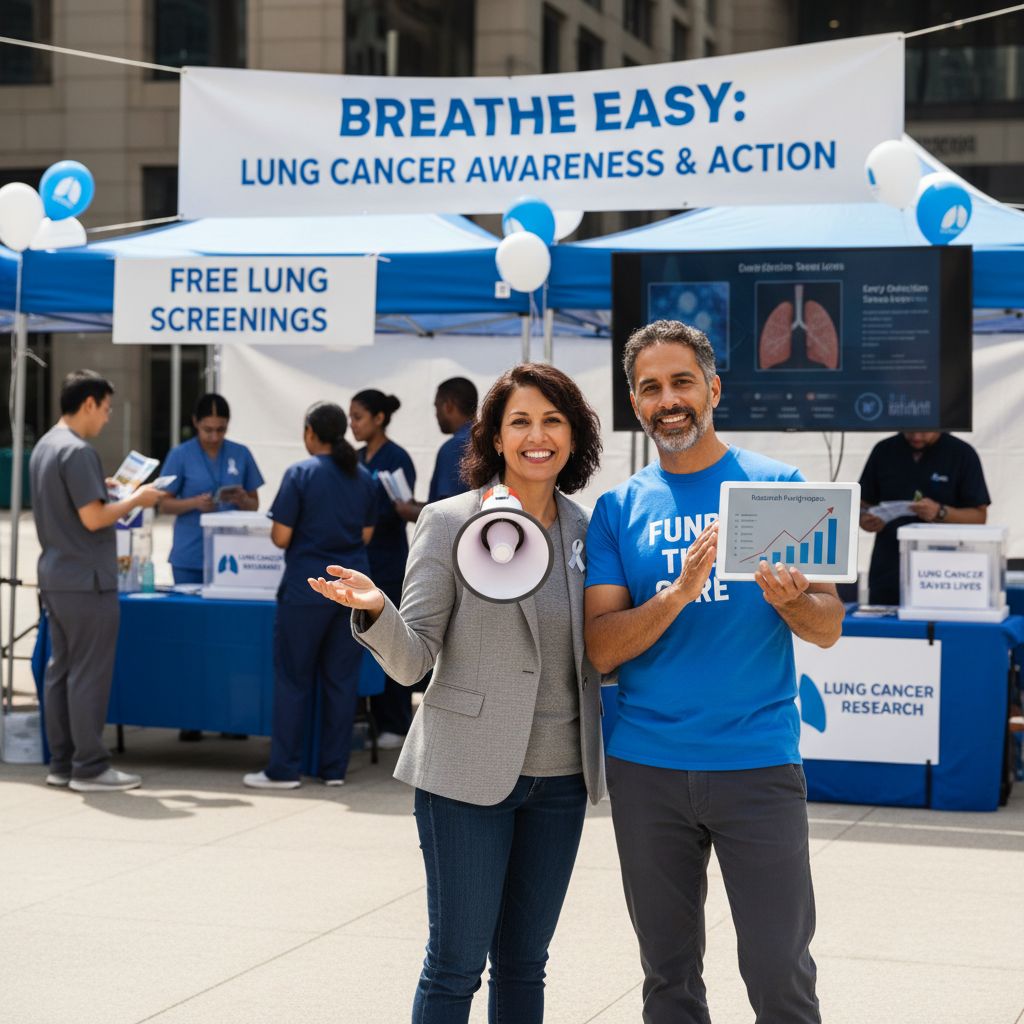
Wendy and Larry Brooks from St. Louis highlight their journey through small cell lung cancer, emphasizing the importance of early detection, patient advocacy, and recent treatment advancements. Their story serves as a national reminder about the need for proactive health measures and increased funding for lung cancer research. By sharing their experiences, they aim to raise awareness and encourage others to prioritize screenings and support advocacy efforts for better treatment options.
St. Louis Couple Highlights Critical Role of Early Screening and Advocacy in Lung Cancer Journey
ST. LOUIS – A recent spotlight on the journey of Wendy and Larry Brooks, a local couple navigating the challenges of small cell lung cancer (SCLC), underscores the profound importance of early detection through screening, persistent patient advocacy, and the evolving landscape of advanced treatments. Their experience serves as a nationwide reminder that proactive health measures and a strong support system are pivotal in confronting aggressive diseases like lung cancer.
Early Detection Saves Lives, Even for High-Risk Individuals
Wendy Brooks, diagnosed with extensive-stage SCLC in July 2023, emphasizes that annual low-dose CT (LDCT) screenings were instrumental in catching her cancer. Her diagnosis followed five years of clear screenings, demonstrating the necessity of consistent monitoring. Wendy had several risk factors, including occupational exposure to silica dust, radon in her childhood home, a family history of lung cancer, and a personal smoking history. Despite these risk factors, the early detection allowed for timely intervention. Experts highlight that when lung cancer is found in its initial stages, often before symptoms appear, treatment outcomes are significantly improved. LDCT screenings are a non-invasive imaging technique that uses a low amount of radiation to create detailed pictures of the lungs, allowing doctors to spot abnormalities that might be too small to cause symptoms. For individuals at high risk, consistent participation in these screenings can be the difference between a manageable diagnosis and a more advanced, challenging prognosis. The widespread availability and increasing awareness of these screenings are vital for public health efforts nationwide.
The Indispensable Role of Care Partners and Advocacy
Larry Brooks, as Wendy’s devoted care partner, represents the critical support system that surrounds patients. The journey for care partners is often fraught with physical, mental, and emotional exhaustion, as they manage medical appointments, medication schedules, and emotional support while often balancing their own responsibilities. Beyond direct care, Wendy and Larry have become fervent advocates for increased lung cancer research funding and greater public awareness. They point out the disproportionate funding for lung cancer research compared to its high mortality rate, urging for more resources to advance treatment options. Their advocacy extends to promoting accessible clinical trials, ensuring that innovative treatments are available beyond specific geographical locations. Such trials are crucial as they test new treatments, procedures, or devices, offering patients access to cutting-edge therapies that may not yet be widely available. Nationwide, patient and care partner advocacy is crucial for driving policy changes, fostering patient-centric care, and securing more research dollars, ultimately benefiting countless individuals affected by lung cancer.
Groundbreaking Advances Offer New Hope for Small Cell Lung Cancer
Historically, SCLC has been known for its aggressive nature and limited treatment avenues, making it one of the most challenging cancers to treat effectively. However, recent years have witnessed significant breakthroughs, offering new hope to patients. The U.S. Food and Drug Administration (FDA) granted accelerated approval in May 2024 for tarlatamab (Imdelltra™), a bispecific T-cell engager, for patients with extensive-stage SCLC whose disease has progressed after platinum-based chemotherapy. This marks a notable expansion of therapeutic options, providing a new mechanism to fight the disease. Tarlatamab works by bringing the patient’s own T-cells (immune cells) directly to the cancer cells, helping the immune system recognize and attack the tumor. This innovative approach offers a much-needed alternative for patients who have exhausted traditional treatments. Immunotherapy, including checkpoint inhibitors like durvalumab and nivolumab, is increasingly being integrated into standard treatment regimens for SCLC, often combined with chemotherapy. These drugs work by blocking proteins that prevent the immune system from attacking cancer cells, essentially “releasing the brakes” on the immune response. These advancements aim to improve survival rates, which have traditionally been low, particularly for extensive-stage SCLC, where median survival was often 7 to 11 months with treatment. Ongoing research continues to explore new drugs and strategies, including antibody-drug conjugates and other targeted therapies, to combat the aggressive nature of SCLC and address treatment resistance, bringing renewed optimism to the lung cancer community nationwide.
Navigating the Financial Strain of a Lung Cancer Diagnosis Nationwide
The financial burden associated with lung cancer treatment is a significant challenge for many families across the nation. Patients and their care partners often face substantial out-of-pocket expenses, including co-pays, deductibles, and non-medical costs like transportation, parking, and lodging for treatment, especially if specialized care requires travel. Moreover, the disease frequently leads to a loss of income due to reduced work hours for the patient or a family member quitting work entirely to provide full-time care. This financial toxicity can compel patients to make difficult choices, sometimes even forgoing recommended medical care, delaying follow-up appointments, or struggling with basic necessities like food and housing. The psychological stress of managing these costs alongside a severe illness adds another layer of difficulty. Various government programs, charitable organizations, patient assistance foundations, and health insurance options exist to help alleviate this economic strain, but understanding and accessing these complex resources are critical for patient well-being and require significant effort from families. Addressing this widespread issue is crucial for comprehensive patient care nationwide.
Frequently Asked Questions (FAQ)
- What is the main message from Wendy and Larry Brooks’ journey with lung cancer?
- Wendy and Larry Brooks’ journey highlights the importance of early detection through screening, persistent patient advocacy for research funding and awareness, and the positive impact of advanced treatments like clinical trials for small cell lung cancer.
- Why is early screening important for lung cancer?
- Early screening, particularly with low-dose CT (LDCT) scans, is crucial because it can detect lung cancer at an early stage, often before symptoms appear, which significantly improves treatment outcomes and survival rates.
- What are some recent advances in small cell lung cancer (SCLC) treatment?
- Recent advances include the accelerated FDA approval of tarlatamab (Imdelltra™) in May 2024 for extensive-stage SCLC after platinum-based chemotherapy, and the increased integration of immunotherapy drugs like durvalumab and nivolumab into standard treatment regimens, often in combination with chemotherapy.
- What kind of financial challenges do lung cancer patients and their families face?
- Nationwide, lung cancer patients and their families often face significant financial challenges including high out-of-pocket medical expenses, loss of income due to reduced work hours or caregiving responsibilities, and difficult choices between treatment and basic living expenses.
- How can patients and care partners advocate for better lung cancer care?
- Patients and care partners can advocate by raising awareness, pushing for increased research funding, participating in clinical trials, and working to ensure that innovative treatments are accessible to a broader community.
Key Features of the Lung Cancer Journey
| Feature | Description | Scope |
|---|---|---|
| Early Screening (LDCT) | Crucial for detecting lung cancer at early, more curable stages, especially for high-risk individuals. | Nationwide |
| Patient & Care Partner Advocacy | Mobilizing for increased research funding, greater awareness, and improved access to clinical trials and patient-centric care. | Nationwide |
| Advanced SCLC Treatments | Recent FDA approvals, such as tarlatamab (Imdelltra™) in May 2024, and the integration of immunotherapies with chemotherapy, mark significant progress in treating aggressive small cell lung cancer. | Nationwide |
| Financial Burden | Significant out-of-pocket expenses, lost income, and productivity costs impose substantial financial toxicity on patients and their families. | Nationwide |
| Clinical Trials | Provide access to innovative and breakthrough treatments, shaping current and future care for lung cancer patients. | Nationwide |
Deeper Dive: News & Info About This Topic
HERE Resources
Building a Lifeline: Navigating Multiple Myeloma Treatment
Tina Wellman Grant Opens for Cancer Survivors