

East Lansing, Michigan, August 26, 2025
News Summary
Researchers at Michigan State University are training retired police dogs, like Maple, to detect American foulbrood, a bacterial disease threatening honey bee populations. This initiative aims to improve disease control in beekeeping, crucial for food production. The project includes training safety measures, the development of a guidebook for ongoing training, and documenting the process for future use, contributing to efforts addressing the decline of honey bee populations.
East Lansing, Michigan — Researchers at Michigan State University (MSU) are spearheading a project aimed at protecting honey bee populations by training retired police dogs, like Maple, to detect a harmful bacterial disease called American foulbrood. This initiative, part of the Pollinator Performance Center’s efforts, is crucial as honey bee populations face alarming declines from various threats, including disease, insecticides, climate change, and a lack of diverse food sources.
American foulbrood is a bacterial disease that impacts honey bee larvae, resulting in high management costs and often leading beekeepers to destroy infected colonies. Early detection of this disease is crucial for preventing its spread among hives and saving resources for beekeepers. The ongoing project aims to train multiple dogs to efficiently identify signs of American foulbrood, thereby enhancing disease control efforts within the beekeeping sector.
Maple, a 9-year-old English springer spaniel, previously served as a human remains detection dog with the St. Joseph County sheriff’s office until her retirement in 2024 due to an injury sustained while on duty. Her handler, Sue Stejskal, has extensive experience training dogs for law enforcement and has taken on the responsibility of training Maple to detect honey bee diseases under this new initiative. The program arose from a collaboration initiated by MSU professor Meghan Milbrath, who recognized the potential of using trained dogs in agricultural settings.
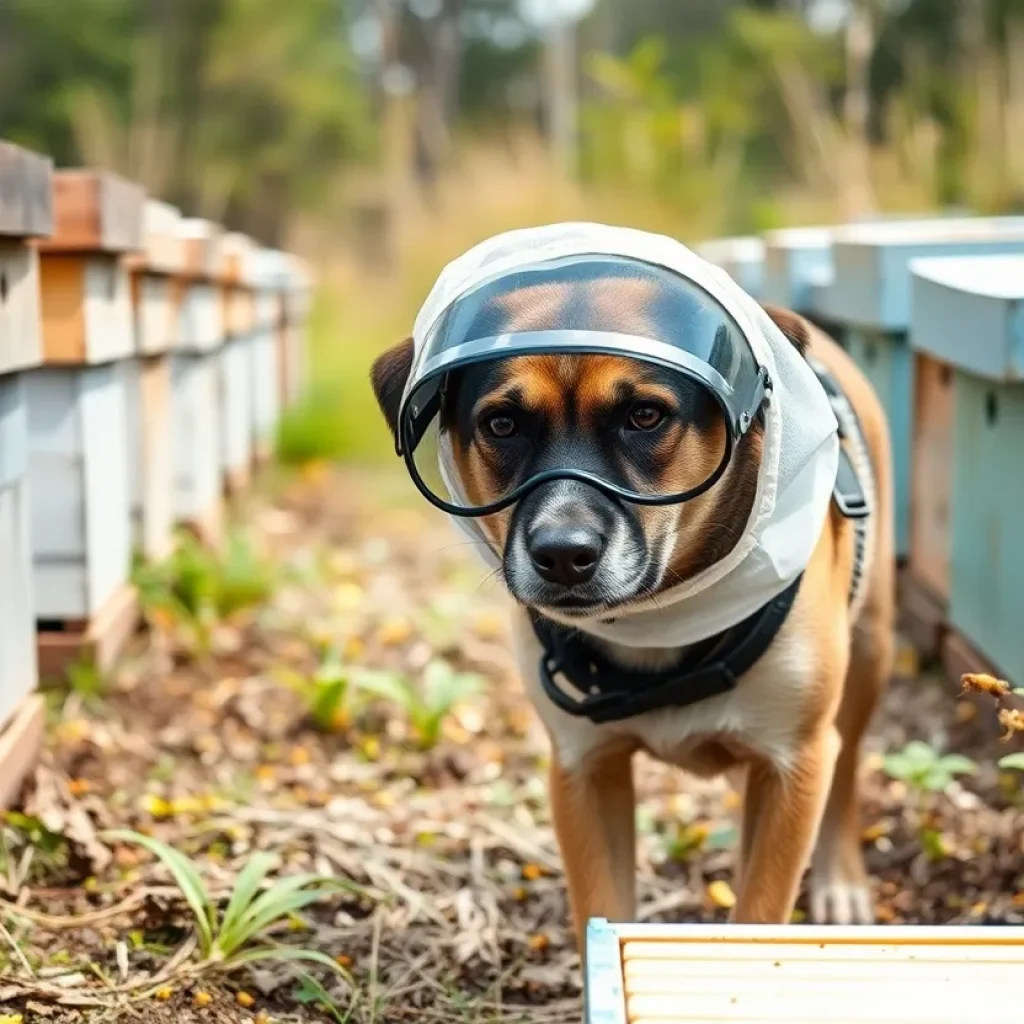
For safety during the training, Maple dons a custom yellow protective suit, which includes a head veil and booties to protect her from bee stings. Stejskal highlights the importance of ensuring that dogs working in active bee yards wear personal protective equipment similar to that worn by humans, emphasizing that safety is paramount in such environments.
The project is not only focused on Maple’s training; it also aims to produce a guidebook to assist other trainers in teaching additional dogs to detect American foulbrood. This collaborative effort to share knowledge and techniques could significantly improve disease detection practices within the beekeeping community.
The implications of such advancements extend beyond individual beekeepers; a significant portion of the human diet relies on crops that require bee pollination. Poor bee health can impact the food supply chain, making initiatives to safeguard these vital pollinators critically important. As Maple progresses in her training, her successful detection of scent clues in hive boxes demonstrates the promising potential of using specially trained dogs in agriculture.
Additionally, the documentation of Maple’s training and the intention to co-author a book about their detection strategy signal a concerted effort to formalize and disseminate this novel approach to managing honey bee health issues. Overall, the integration of dogs like Maple into agricultural practices marks a positive step toward more effective disease control and a brighter future for honey bee populations.
FAQ
What is American foulbrood?
American foulbrood is a bacterial disease that affects honey bee larvae, leading to high management costs for beekeepers and often resulting in the destruction of infected colonies.
How can dogs help detect honey bee diseases?
Dogs can be trained to recognize the scent clues associated with diseases like American foulbrood, allowing for early detection that helps prevent the spread among hives and saves resources for beekeepers.
Why are honey bee populations declining?
Honey bee populations are declining due to multiple factors, including disease, exposure to insecticides, climate change, and a lack of diverse food sources.
Key Features of the Project
| Feature | Description |
|---|---|
| Dog Training | Training retired police dogs to detect American foulbrood in honey bee hives. |
| Safety Measures | Dogs wear protective equipment, including suits, head veils, and booties. |
| Guidebook Development | Creation of a guidebook to help train additional dogs in disease detection. |
| Documented Training | Documenting the training process and planning to co-author a book on the method. |
| Agricultural Impact | Enhancing disease control efforts to improve honey bee health, which is critical for food production. |
Deeper Dive: News & Info About This Topic
HERE Resources
Michigan Researchers Use Retired Police Dog to Detect Bee Diseases
Training Dogs to Combat American Foulbrood in Honey Bees
Training Dogs to Detect Honey Bee Diseases
Additional Resources
- ABC News: Former Police Dog Helps Sniff Out Bee Diseases
- Wikipedia: Honey Bees
- WILX: Michigan State University Uses Dogs in Bee Research
- Google Search: American foulbrood
- MLive: Retired Police Dog Assists in Beehive Research
- Encyclopedia Britannica: Pollination
- The Guardian: Michigan Dog Detects Bacteria in Honeybees
- Google News: Bee Population Decline

Author: STAFF HERE NOVI WRITER
The NOVI STAFF WRITER represents the experienced team at HERENovi.com, your go-to source for actionable local news and information in Novi, Oakland County, and beyond. Specializing in "news you can use," we cover essential topics like product reviews for personal and business needs, local business directories, politics, real estate trends, neighborhood insights, and state news affecting the area—with deep expertise drawn from years of dedicated reporting and strong community input, including local press releases and business updates. We deliver top reporting on high-value events such as Motor City Comic Con, Michigan State Fair, and Novi Home and Garden Show. Our coverage extends to key organizations like the Novi Chamber of Commerce and Novi Community Foundation, plus leading businesses in automotive, technology, and manufacturing that power the local economy such as Gentherm, Stoneridge, and Daifuku North America. As part of the broader HERE network, including HEREDetroitMI.com, HEREGrandRapids.com, HERENorthville.com, and HEREPlymouth.com, we provide comprehensive, credible insights into Michigan's dynamic landscape.