

News Summary
Michigan State University is enhancing its cultural curriculum by introducing the Kichwa language, taught by Fulbright Foreign Language Teaching Assistants. This initiative addresses cultural displacement faced by indigenous communities. With the Kichwa language’s historical significance linked to the Inca Empire, educators aim to preserve cultural identity and awareness among students. The program includes various events organized in collaboration with an indigenous student organization, showcasing traditional Kichwa practices. This effort reflects a growing recognition of the importance of preserving linguistic diversity and cultural heritage.
East Lansing, Michigan – Michigan State University (MSU) is enhancing its cultural curriculum through the inclusion of the Kichwa language and culture, taught by Micaela Jerez Masaquiza and Elsa Caín Yuqilema, who are currently serving as Fulbright Foreign Language Teaching Assistants (FLTAs). Their teaching initiative not only aims to educate students about Kichwa but also seeks to address issues of cultural displacement experienced by indigenous communities due to globalization and migration.
The Kichwa language, a variant of Quechua, has historical significance as it was the official language of the Inca Empire prior to the Spanish colonization over 500 years ago. Jerez and Caín Yuqilema, both from the Ecuadorian Andes, share their language with MSU students, starting classes with traditional greetings in Kichwa. This approach highlights the importance of language as a means of preserving cultural identity.
The instructors aim to combat the threat of cultural erosion through their teaching. With Kichwa facing existential risks from the pressures of migration and assimilation into dominant languages such as Spanish and English, Jerez and Caín Yuqilema are committed to promoting awareness of their language and culture far from home.
Both teachers learned Spanish as their second language and took on the challenge of learning English as young adults to expand their job prospects. Their positions at MSU were made possible through the Fulbright academic exchange program, a global initiative that facilitates educational and cultural exchanges to build mutual understanding between nations.
The presence of Kichwa language education at MSU allows students to broaden their understanding of indigenous cultures in Latin America. Students have noted that learning Kichwa challenges the often romanticized perceptions of indigenous identity, offering a more complex view of the realities faced by these communities.
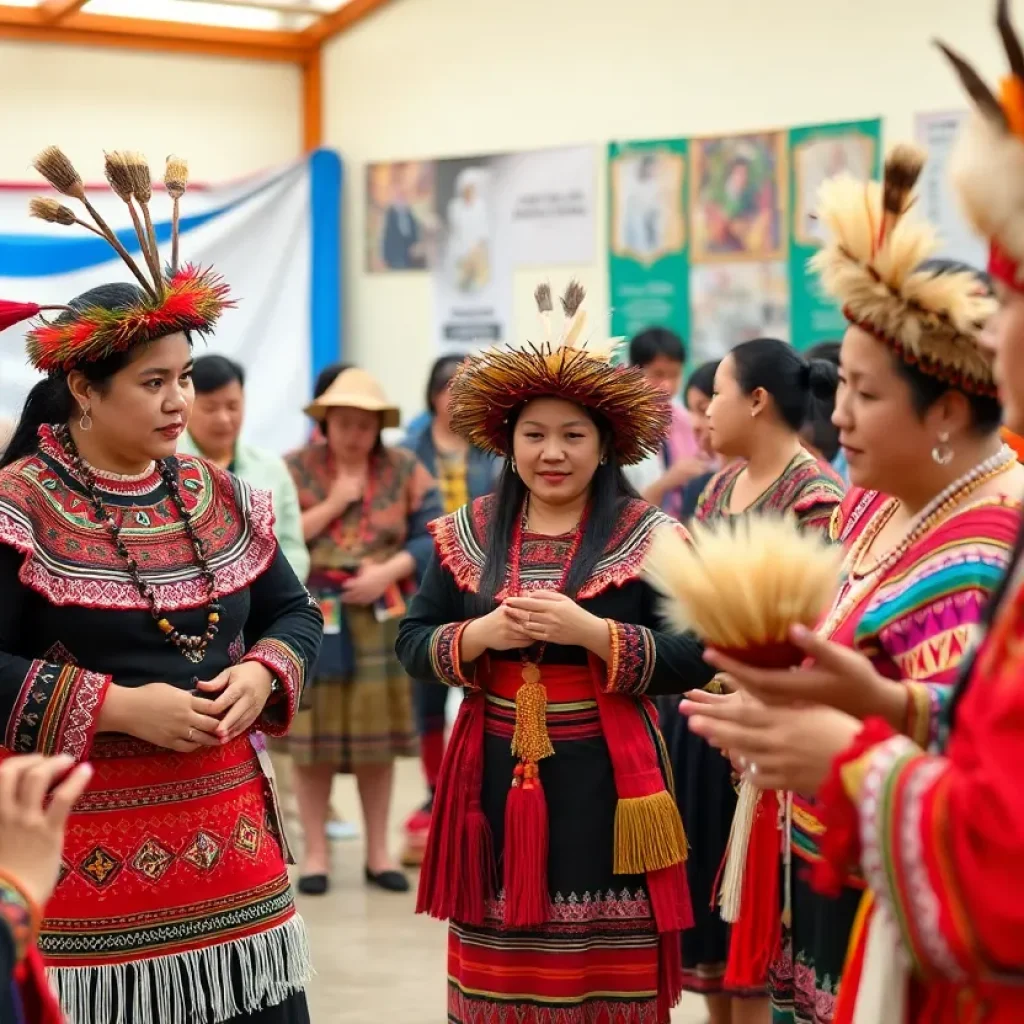
In collaboration with Timetzalimet, the indigenous student organization at MSU, Jerez and Caín Yuqilema have organized various cultural events that showcase traditional Kichwa practices, including ceremonies led by a yachak (shaman). During these events, Jerez actively translates between Kichwa and Spanish, bridging communication gaps and enhancing cultural understanding among attendees.
The instructors have highlighted concerning statistics regarding the decline of the Kichwa language. According to UNESCO, the rapid loss of Kichwa speakers is occurring amidst a backdrop of dominant languages. An Ecuadorian census indicates that only 3.9% of the country’s population speaks an indigenous language, with Kichwa speakers declining significantly over recent years. Many young Ecuadorians no longer speak Kichwa or wear traditional clothing, which signals a troubling trend of cultural erosion.
Both Jerez and Caín Yuqilema firmly believe in the importance of retaining indigenous languages as a vital link to cultural heritage. They emphasize that teaching Kichwa in the United States serves as an act of cultural affirmation and resilience against the pressures of language disappearance. Moreover, Jerez has pointed out that her teaching efforts bring awareness to the existence and cultural richness of the Salasaca community, an indigenous group in Ecuador.
MSU students have expressed a growing desire to learn indigenous languages despite the limited availability of courses compared to more widely studied languages. This highlights an increasing recognition of the value of preserving linguistic diversity as part of global cultural heritage.
The initiative at MSU serves not only to educate students about the Kichwa language but also as a broader movement to strengthen cultural identity and resistance to cultural displacement within indigenous communities. Through the dedication of educators like Jerez and Caín Yuqilema, there is hope for the continued vitality of the Kichwa language and its associated culture.
Deeper Dive: News & Info About This Topic
HERE Resources
Revitalizing Kichwa Language at Michigan State University
Additional Resources
- Michigan Advance: A Cultural Bridge Between Ecuador and the MSU Community
- Wikipedia: Kichwa_language
- El País: Ecuador’s Kichwa Language is Kept Alive in the US
- Google Search: Kichwa language
- State News: MSU Offers Introductory Course to Indigenous Language Kichwa
- Encyclopedia Britannica: Kichwa